
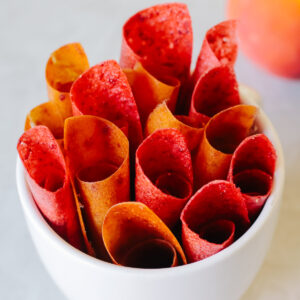
Make homemade fruit leather with fresh fruit, applesauce, and your favorite dehydrator or oven! This easy fruit leather recipe is naturally sweet, fun to customize with different fruits, and makes a healthy snack.
You might also like my homemade applesauce, apple chips, or instant pot apple cider!
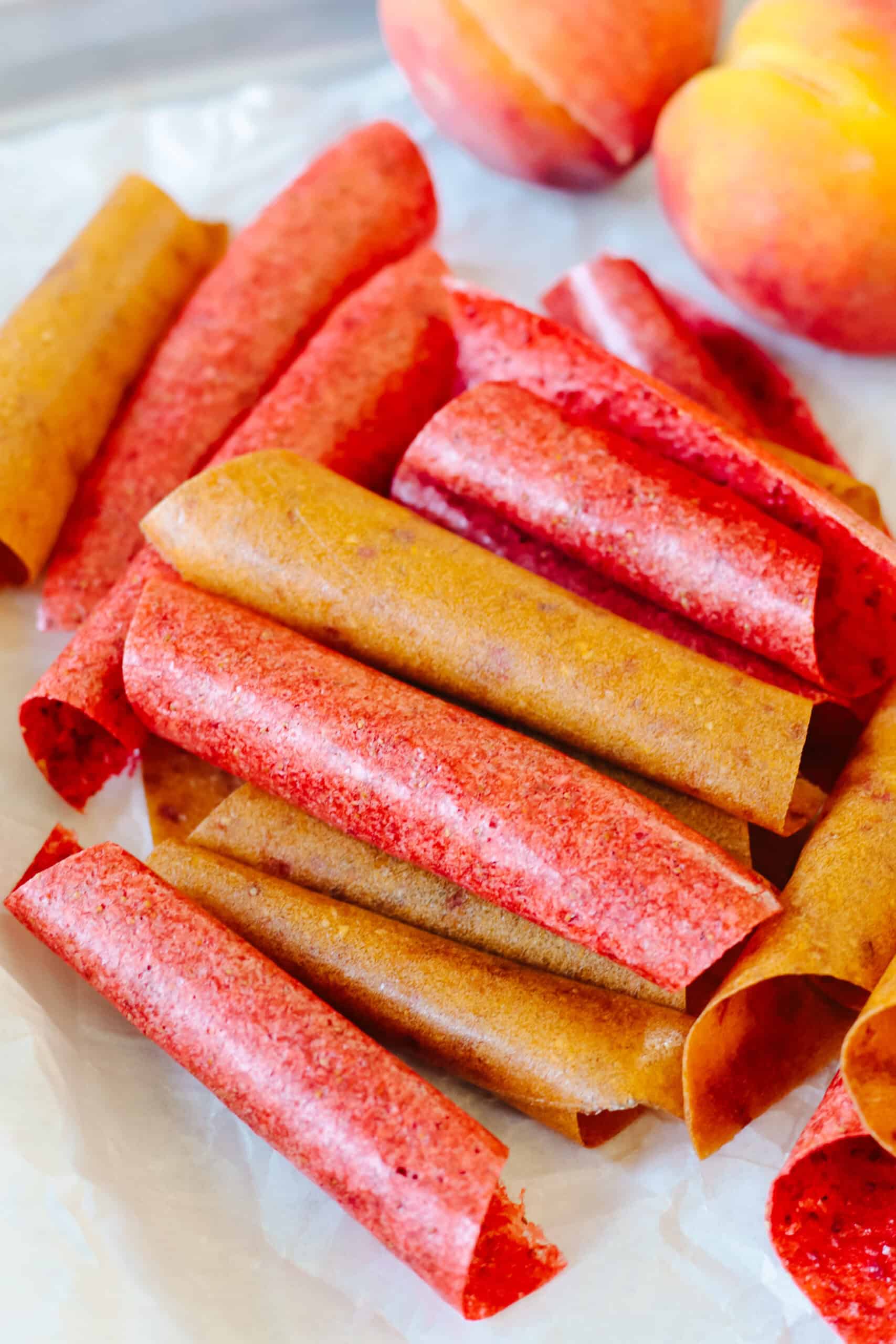
Homemade fruit leather is one of my favorite ways to preserve fresh fruit before it goes bad. It's healthier than many store-bought fruit snacks, incredibly easy to make, and absolutely delicious. Whether you're making strawberry fruit leather, peach fruit leather, or experimenting with your own fruit combinations, this simple recipe works with almost any fruit.
Why You'll Love This Recipe
- Only two main ingredients. Fresh fruit and applesauce are all you need for naturally delicious fruit leather. I also add a splash of lemon juice to preserve the fruit's color.
- Dehydrator and oven instructions included. Make it whichever way works best for your kitchen.
- A great way to preserve fresh fruit. Use ripe fruit before it goes bad and enjoy homemade fruit leather for weeks.
- Naturally sweet. Most fruits are sweet enough on their own, but you can add a little honey or maple syrup if desired.
- Easy to customize. Mix and match your favorite fruits to create endless flavor combinations.
- Kid-friendly snack. Homemade fruit leather is perfect for lunch boxes, road trips, hiking, and after-school snacks.
Jump to:
- Why You'll Love This Recipe
- What Is Fruit Leather?
- Why Add Applesauce?
- Dehydrator vs. Oven
- The Best Fruits for Homemade Fruit Leather
- Ingredients
- How To Make Fruit Leather in a Dehydrator
- How To Make Fruit Leather in the Oven
- Tips & Tricks
- Homemade Fruit Leather Flavor Ideas
- Homemade Fruit Leather FAQs
- More Fruit Recipes To Make
- Homemade Fruit Leather
What Is Fruit Leather?
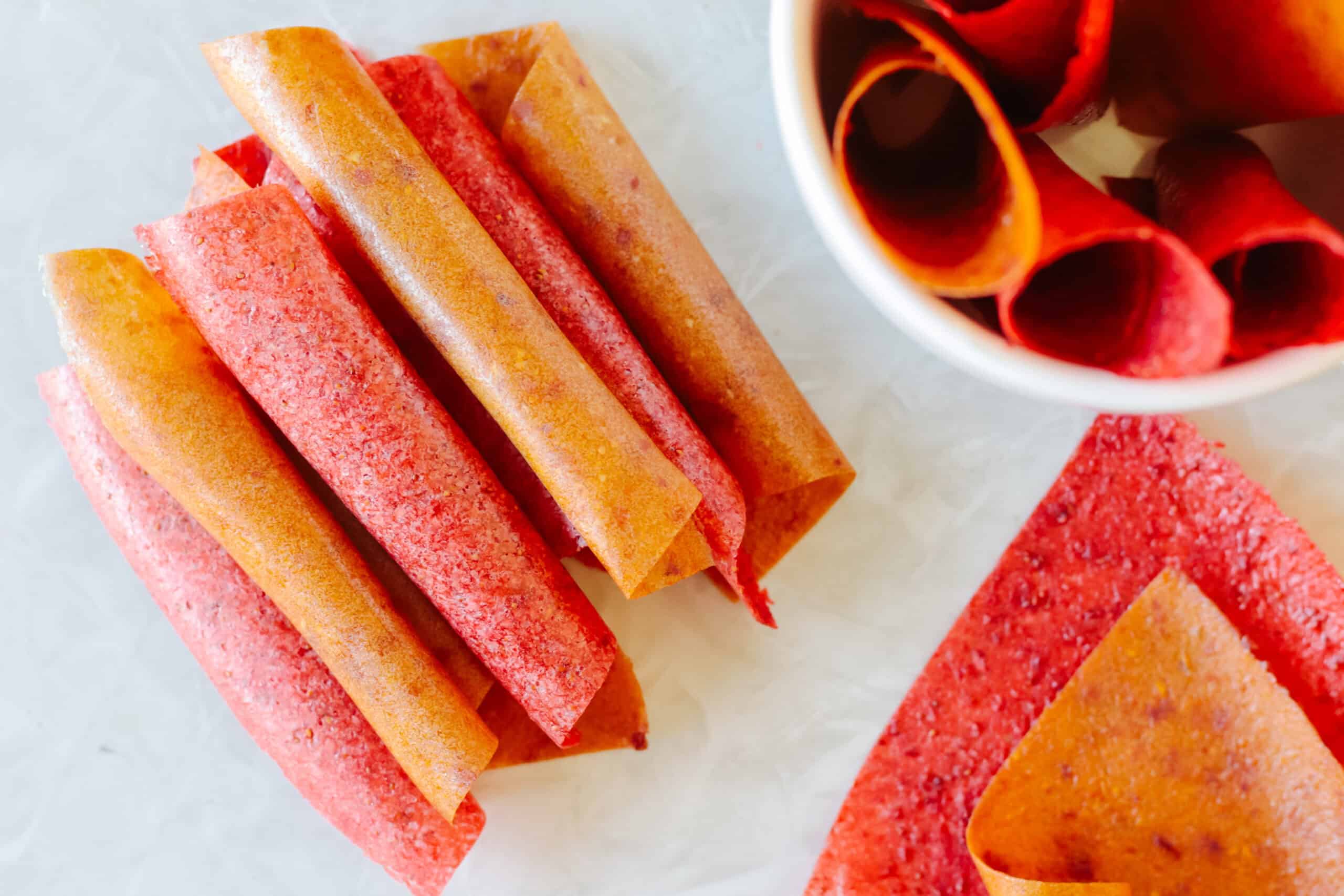
Fruit leather is made by pureeing fruit into a smooth mixture, spreading it into a thin layer, and slowly drying it until it becomes soft, chewy, and flexible. It's similar to store-bought fruit roll-ups but made with real fruit and simple ingredients.
Adding applesauce helps create a smoother texture, stretches the fruit puree, and allows many fruits to dry more evenly without significantly changing the flavor. Today I'm demonstrating the recipe with strawberries, but this same method works beautifully with peaches, blueberries, raspberries, mangoes, and dozens of other fruits. You'll also see peach fruit leather in some of the process photos.
Why Add Applesauce?
Applesauce helps create smooth, flexible fruit leather with a consistent texture. It adds natural sweetness, helps stretch the fruit puree, and works especially well with berries and other fruits that can become thick or seedy when blended on their own.
I usually use unsweetened applesauce so the flavor of the fresh fruit shines through. Most people won't even notice it's there—the fruit remains the star of the recipe.
Dehydrator vs. Oven
I usually make fruit leather in my dehydrator because it produces the best texture and doesn't tie up my oven for hours, but I've included oven instructions too for anyone who doesn't own a dehydrator.
Both methods work well, but if you own a dehydrator, I highly recommend using it. Mine came with a couple of fruit leather mats, but I ordered an extra set to be able to make more trays at a time.
A dehydrator dries fruit at a low, consistent temperature, creating soft, flexible fruit leather with very little effort. It also frees up your oven while the fruit dries.
If you don't have a dehydrator, your oven is an excellent alternative. Simply use the lowest temperature setting and allow the fruit to dry slowly until it's no longer sticky.
The Best Fruits for Homemade Fruit Leather
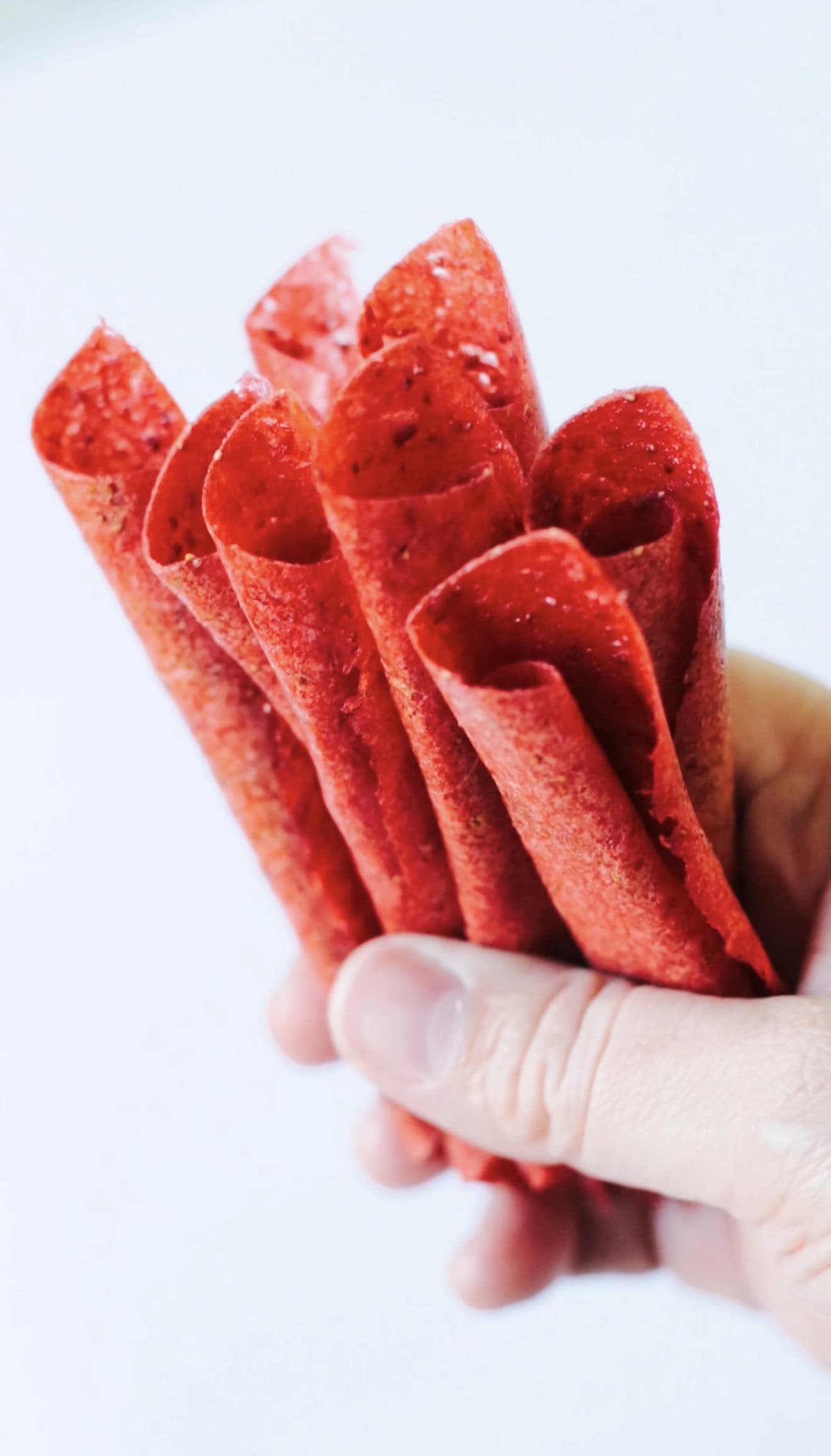
Almost any fruit works well for homemade fruit leather.
Some favorites include:
- Strawberries
- Blueberries
- Raspberries
- Blackberries
- Peaches
- Mangoes
- Pineapple
- Apricots
- Plums
You can also combine fruits for delicious flavors like strawberry peach, mixed berry, blueberry peach, raspberry apple, or mango pineapple.
Ingredients
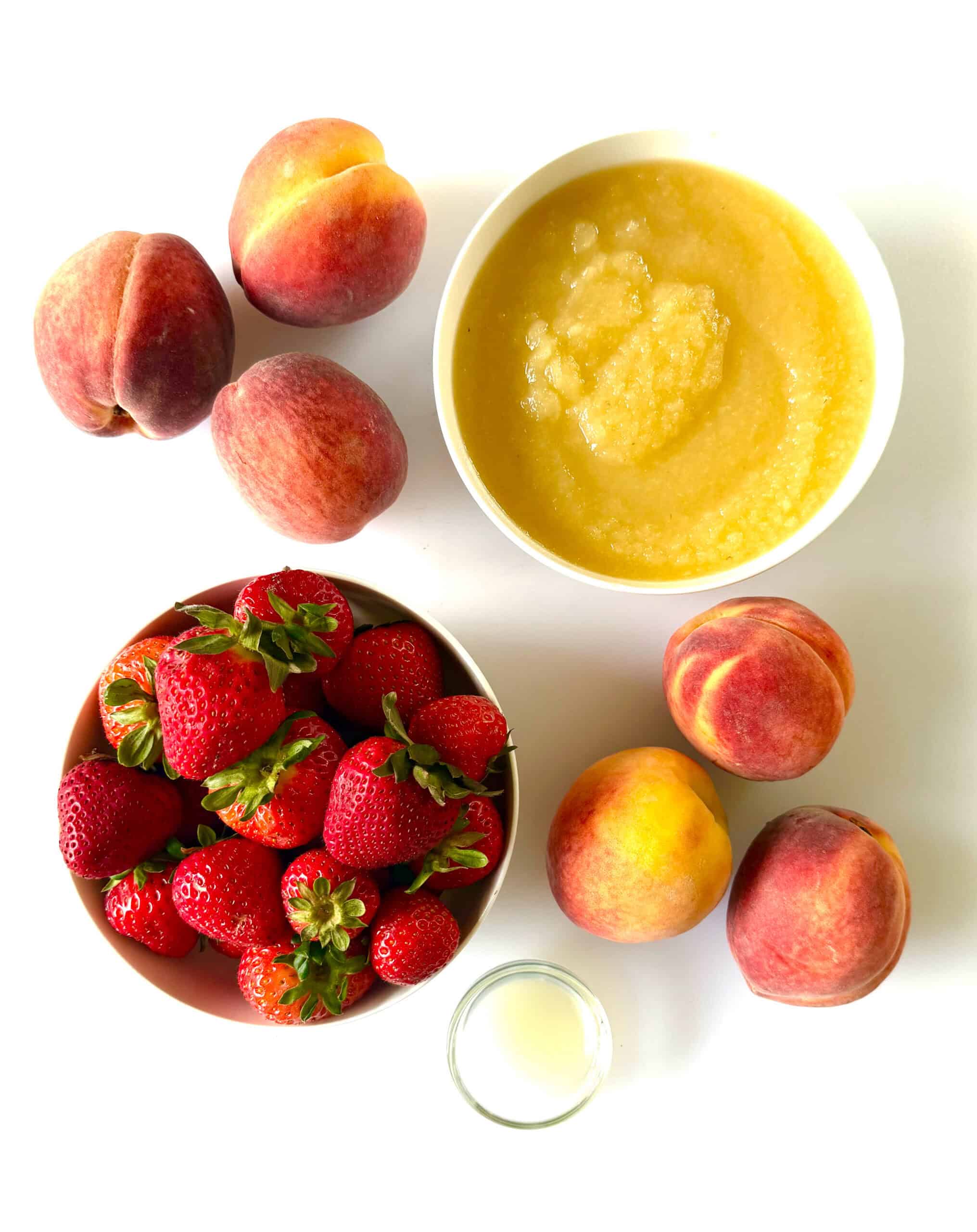
- Fresh Fruit (1 pound): Use ripe fruit for the sweetest flavor. Wash well and remove stems, pits, peels, or cores as needed before blending.
- Unsweetened Applesauce (1 cup): Applesauce creates a smoother fruit puree, helps many fruits dry evenly, and adds natural sweetness without overpowering the fruit.
- Lemon Juice (Optional): A squeeze of fresh lemon juice brightens the flavor and helps prevent lighter-colored fruits from browning.
See the recipe card for full information on ingredients and quantities.
How To Make Fruit Leather in a Dehydrator
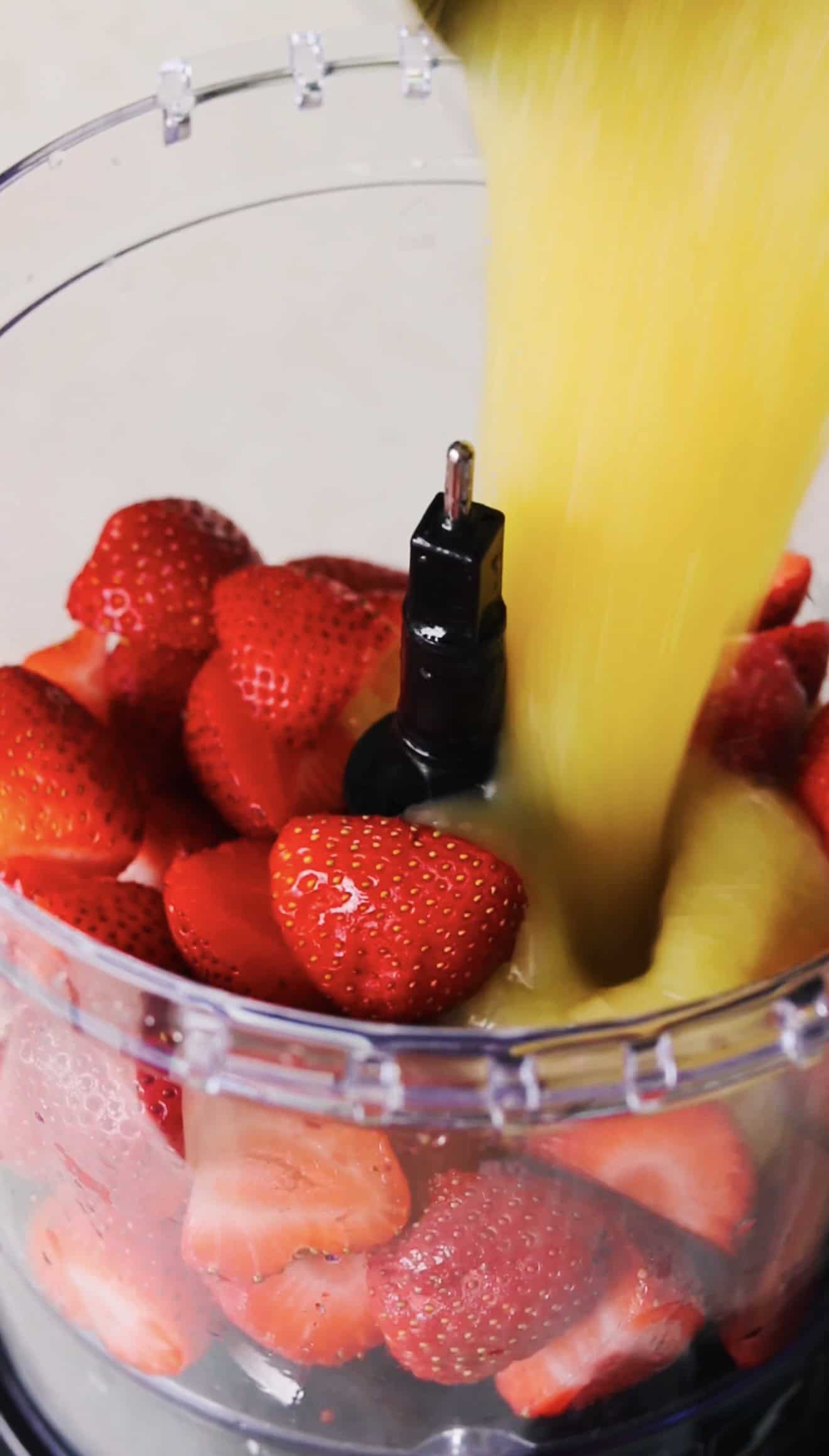
Step 1: Prepare the Fruit. Wash and prepare the fruit by removing stems, pits, peels, or cores if necessary.
Note: I do NOT peel peaches when making peach fruit leather. I simply chop the peaches up into small pieces.
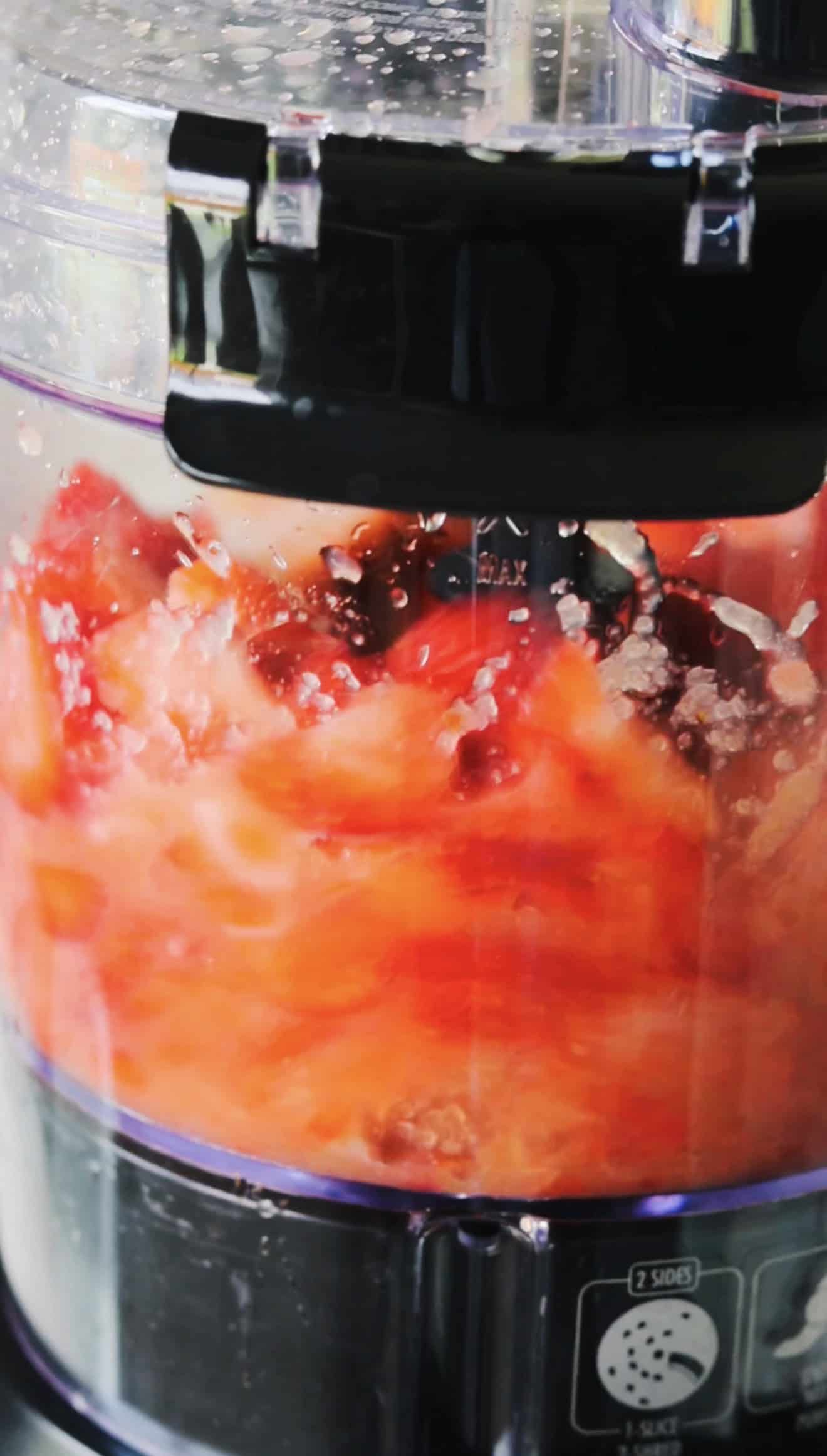
Step 2: Blend the Puree. Add the fruit, applesauce, and a splash of lemon juice to a blender or food processor.
Blend until completely smooth.
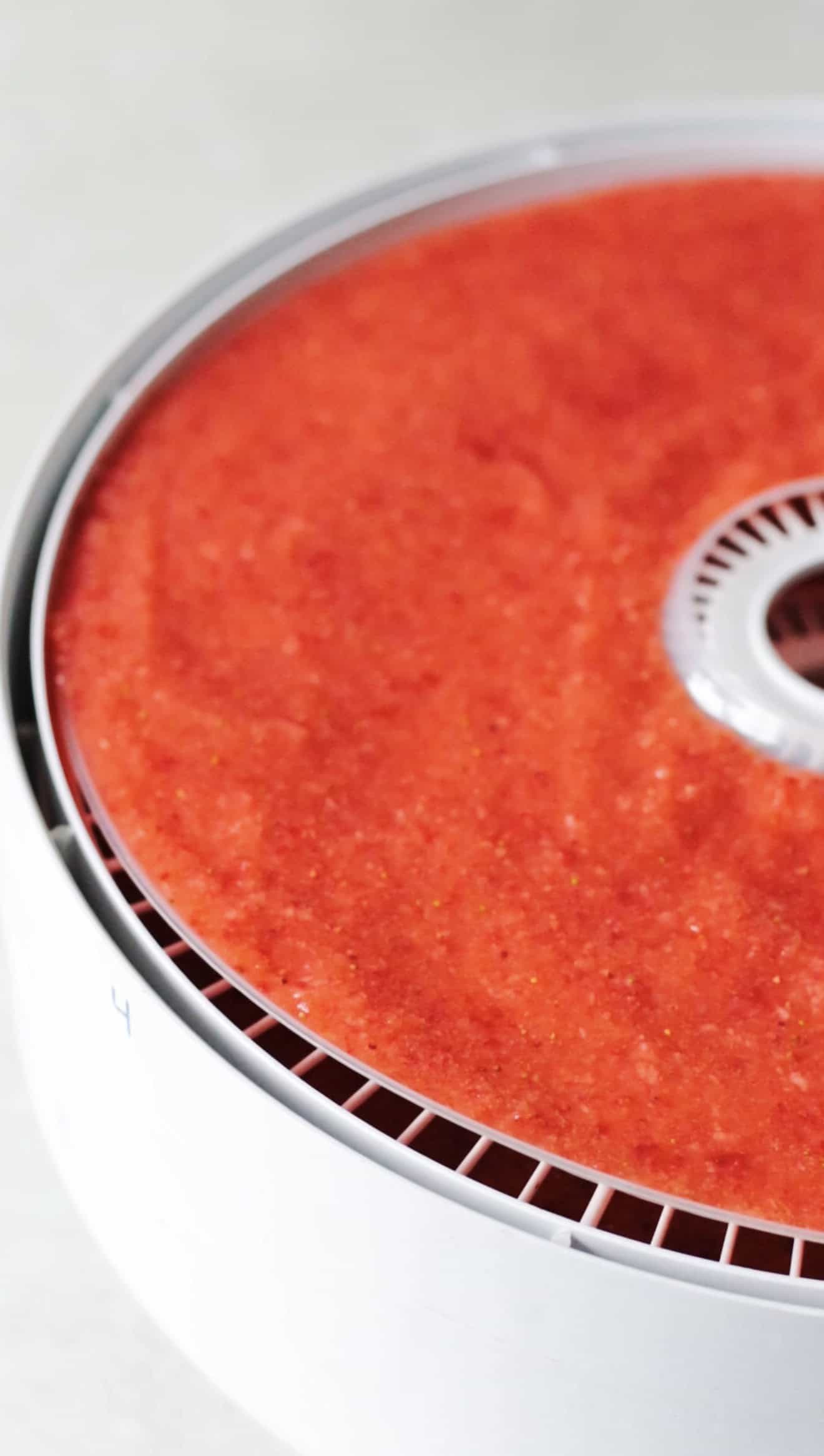
Step 3: Fill the Dehydrator Trays. Lightly spray fruit leather trays or silicone liners with nonstick cooking spray.
Pour the fruit puree onto the trays and spread into an even layer about ⅛-inch thick using an offset spatula.
Note: Leave the edges just slightly thicker than the center to help everything dry evenly.
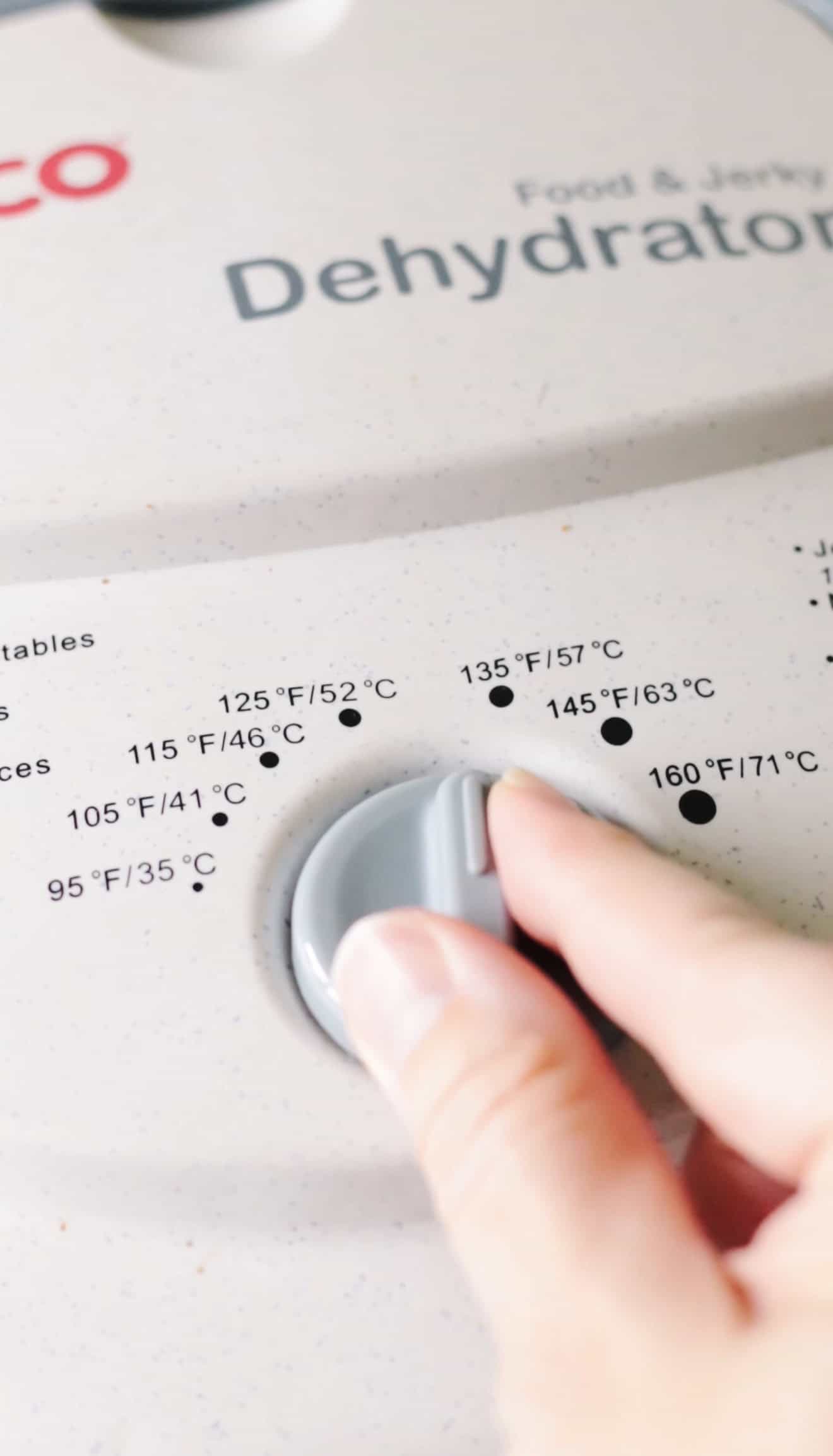
Step 4: Dehydrate. Dry at 135°F for 6–10 hours, depending on the fruit, humidity, and thickness.
The fruit leather is finished when it peels easily from the tray and no longer feels sticky.
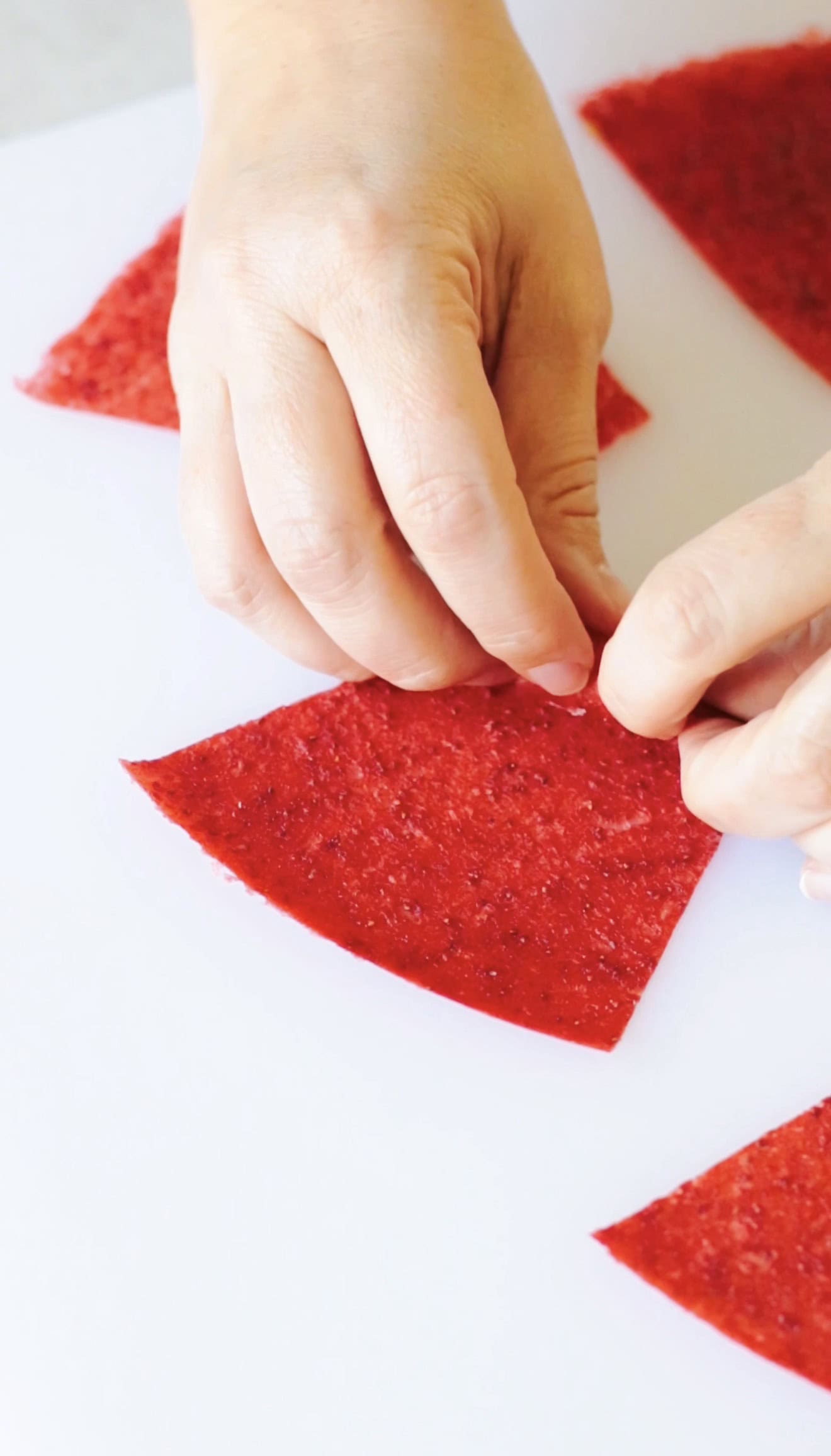
Step 5: Cool and Cut. Allow the fruit leather to cool completely. Peel it from the tray, cut into strips with kitchen scissors or a pizza cutter, and roll each strip in parchment paper.
How To Make Fruit Leather in the Oven
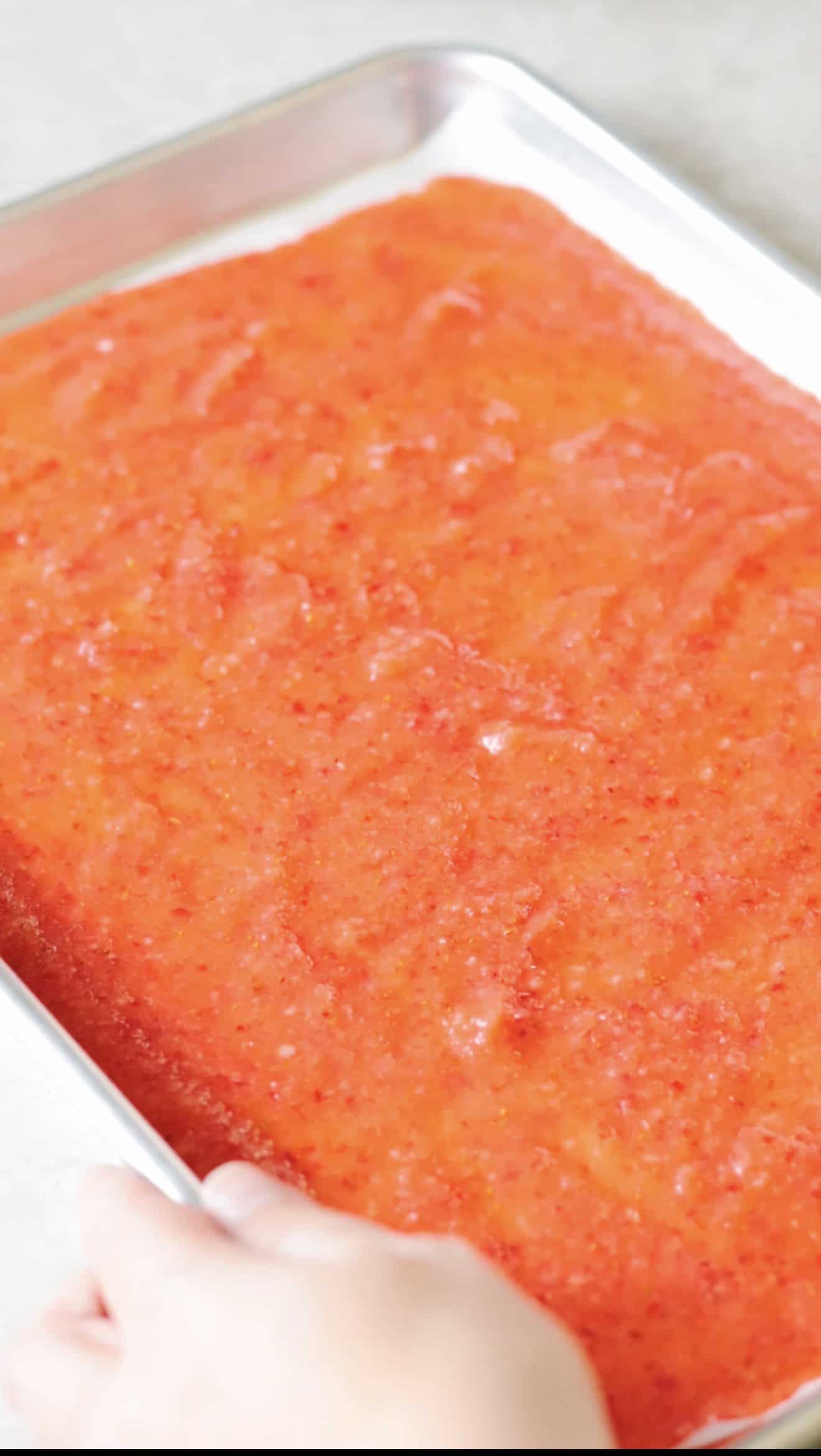
Preheat your oven to its lowest temperature, ideally 170°F or lower.
Line a rimmed baking sheet with parchment paper or a silicone baking mat.
Spread the fruit puree into an even ⅛-inch layer, leaving the edges slightly thicker than the center.
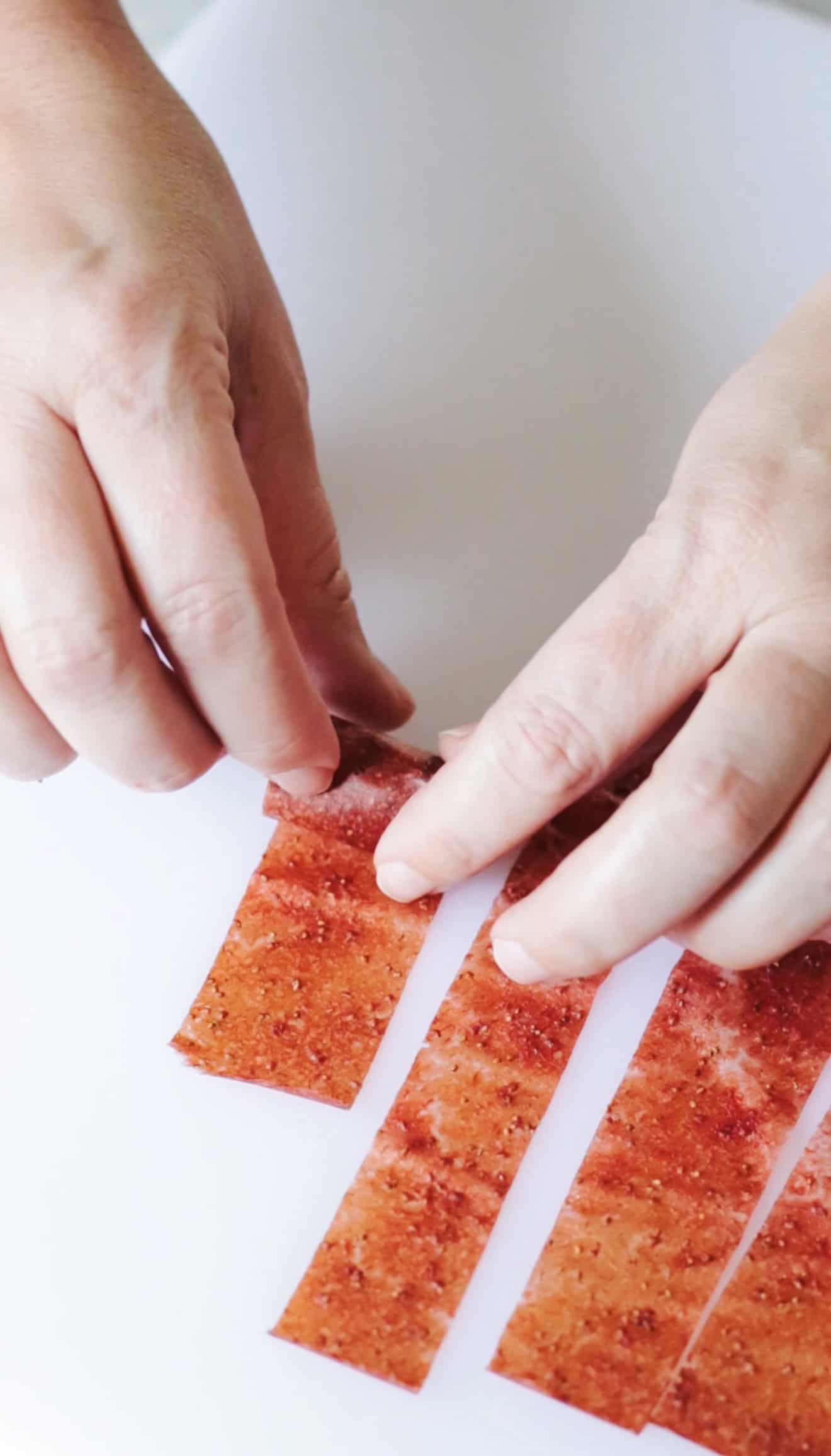
Bake for 4–8 hours, checking periodically. Rotate the pan if your oven has hot spots.
The fruit leather is ready when it peels easily from the parchment and feels dry but still flexible.
Allow it to cool completely before cutting into strips.
Tips & Tricks
- Use ripe fruit for the sweetest flavor.
- Blend until perfectly smooth for the best texture.
- Don't make the puree too thin. If you're using especially juicy fruit, the drying time will increase considerably. The puree should resemble applesauce—not juice.
- Spread the puree into an even layer so it dries uniformly.
- Leave the edges slightly thicker than the center to prevent over-drying.
- Don't over-dry the fruit leather. It should bend easily without cracking.
- Use parchment paper or silicone liners for easy removal.
- If using the oven, use the lowest temperature possible and rotate the pan if needed.
- Experiment with different fruit combinations to create your own favorite flavors.
Homemade Fruit Leather Flavor Ideas
- Strawberry
- Strawberry Peach
- Blueberry
- Raspberry
- Mixed Berry
- Peach
- Mango
- Mango Pineapple
- Apple Cinnamon
- Cherry
- Apricot
- Plum
Homemade Fruit Leather FAQs
Yes! Simply spread the puree onto a parchment-lined baking sheet and dry it in your oven using the lowest temperature setting until the fruit leather is no longer sticky but still flexible.
Yes. A dehydrator dries fruit more evenly at a lower temperature, producing the best texture. The oven is still a great option if you don't own one.
Drying time depends on the type of fruit, humidity, thickness of the puree, and your appliance. Continue drying until the fruit leather peels easily and is dry to the touch.
It simply needs more drying time. Continue drying in 30-minute increments until the surface is no longer tacky.
It was dried too long. Proper fruit leather should be soft, flexible, and easy to roll.
Yes. Thaw the fruit first and drain off excess liquid before blending.
No, but applesauce creates a smoother texture, adds sweetness, helps many fruits dry more evenly, and stretches the recipe while maintaining great flavor.
Once completely dry, cut into strips and store them in an airtight container or zip-top bag in a cool, dry place. Homemade fruit leather keeps for about 2 weeks at room temperature, 2 months in the refrigerator, or up to 6 months in the freezer.
Absolutely! Feel free to experiment using whatever ripe fruit you have on hand. My favorite combination is strawberry peach or peach apricot.
Usually you won't need to. Ripe fruit is naturally sweet, especially when combined with applesauce. If your fruit is especially tart, you can stir in a tablespoon or two of honey or maple syrup before dehydrating.
More Fruit Recipes To Make
MADE THIS RECIPE AND LOVED IT? 💛 Please leave a STAR rating and COMMENT below! Post it to Facebook or Pinterest to easily share with friends!
Homemade Fruit Leather
Equipment
- dehydrator
Instructions
- Wash and prepare the fruit by removing stems, pits, peels, or cores if necessary.Note: I do NOT peel peaches or apricots when making fruit leather. I simply chop the peaches up into small pieces.
- Add the fruit, applesauce, and a splash of lemon juice to a blender or food processor.Blend until completely smooth.
Dehydrator Method
- Lightly spray fruit leather trays or silicone liners with nonstick cooking spray.Pour the fruit puree onto the trays and spread into an even layer about ⅛-inch thick using an offset spatula.Note: Leave the edges just slightly thicker than the center to help everything dry evenly.
- Dry at 135°F for 8-10 hours, depending on the fruit, humidity, and thickness.The fruit leather is finished when it peels easily from the tray and no longer feels sticky.
- Allow the fruit leather to cool completely. Peel it from the tray, cut into strips with kitchen scissors or a pizza cutter, and roll each strip in parchment paper.
Oven Method
- Preheat your oven to its lowest temperature, 170 degrees or lower. Line a rimmed baking sheet with parchment paper or a silicone baking mat.Spread the fruit puree into an even ⅛-inch layer, leaving the edges slightly thicker than the center.
- Bake for 4-8 hours, checking periodically. Rotate the pan if your oven has hot spots.The fruit leather is ready when it peels easily from the parchment and feels dry but still flexible.Allow it to cool completely before cutting into strips.



Leave a Reply