
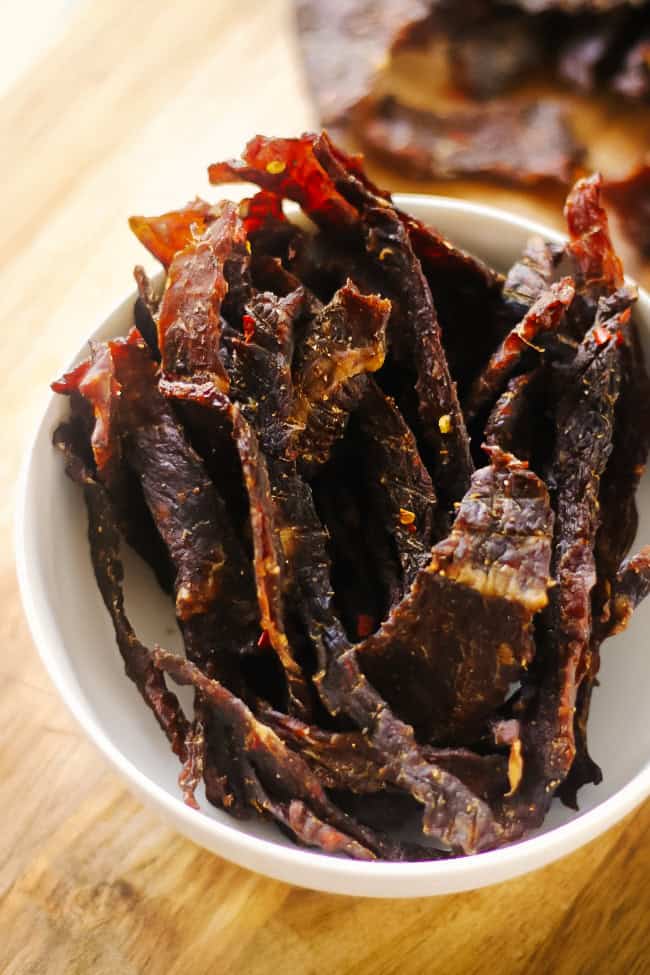
Easy homemade jerky recipes with the best marinades. Everything you need to know to make jerky.
If you like this guide, you'll also like our guides for making the best smoked chicken legs and BBQ ribs!
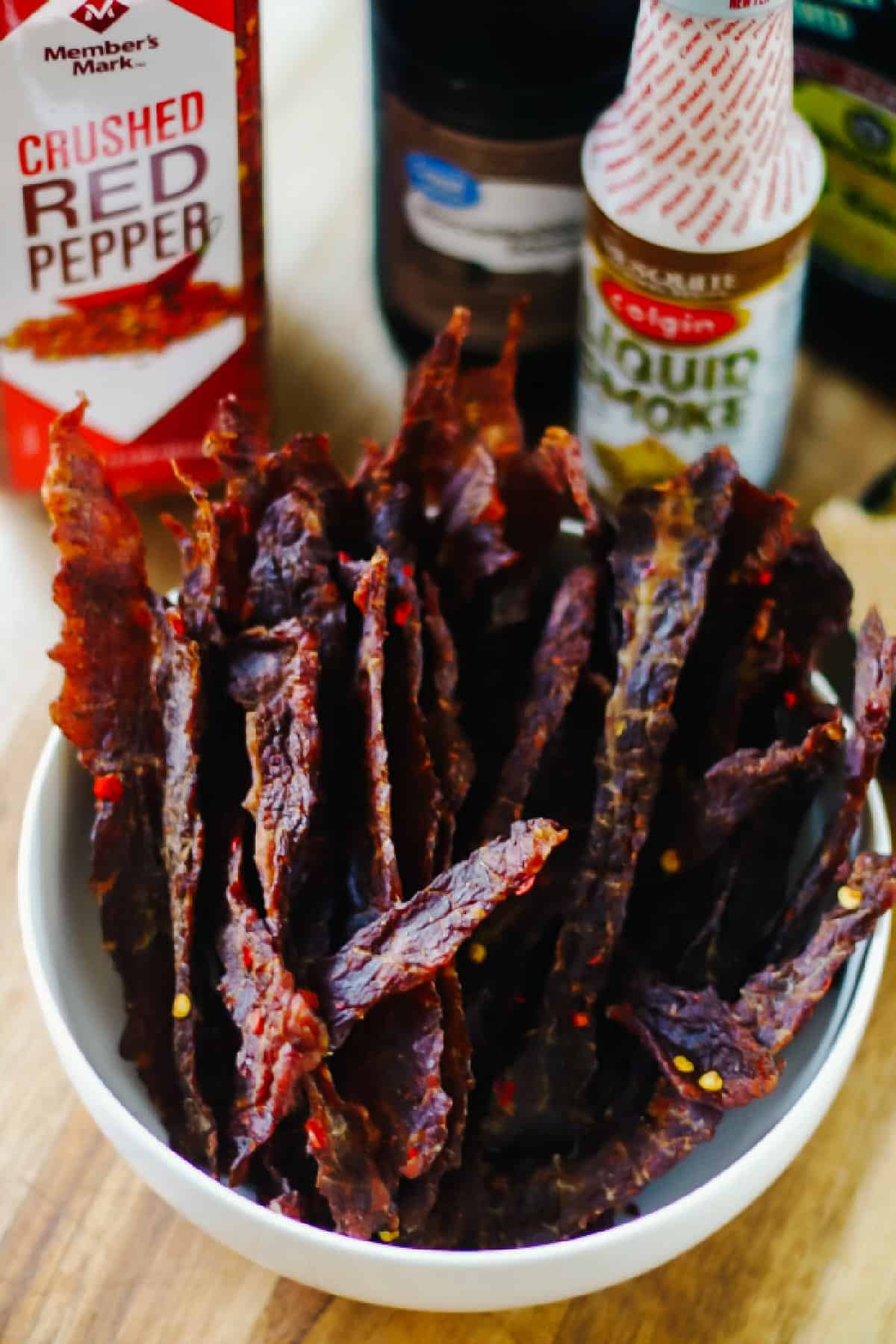
My husband has been making homemade jerky for years. He taught our sons how to make it as well, and they are just as good at whipping up delicious jerky marinades as he is! They created their own recipes, making small tweaks here and there, and for a while were making jerky every month. Making jerky can be intimidating, but with the right guide, it is actually pretty straightforward. I asked him to share his method for easy homemade jerky and his top 3 marinade recipes.
Why This Method Works
- Easy to customize. It may take several batches of jerky to get it just the way you like it. Make notes on what you like and what you'd change next time. Our recipes are tried and true, with a nice blend of sweet and spice.
- Simple ingredients. Follow our tips for not only selecting an affordable cut of meat, but one that will yield delicious jerky. The marinade ingredients are simple and you might already have everything you need in your pantry.
- Even drying. You can make jerky in an oven, a smoker, or a dehydrator. We've made it in the oven and in a dehydrator, and hands down, we prefer the dehydrator. A dehydrator allows you to dry at lower temperatures than an oven and is more energy-efficient.
Jump to:
Tips and Tricks
- Buy cheap meat. When making jerky for the first time, buy a cheap cut of meat. Purchase the cheapest cut that you can find, with the least amount of marbled fat, and work your way up to the good stuff.
- Avoid meats with high fat content. We all know that fat is delicious, and it adds great flavor, but it is not your friend when making jerky. It will diminish the shelf life of your jerky. Sam's Club sells an "Eye of Round" cut that is cryovac sealed. It is relatively inexpensive and is a large, round cut of meat with minimal fat streaks. It always seems to have a large slab of fat on the bottom of the cut that you can trim off. This cut is great for slicing into thin strips for French dips and fajitas, and is perfect for making jerky.
- Cut meat against the grain. This will make the final jerky pieces more of what you would be used to seeing and easier to chew.
- Thickness matters: If you cut your meat super thin, it will dry very quickly, and the texture is a little too leathery for my liking. If you cut thickly, it will take longer to dry and may be harder to chew. A good rule of thumb is to slice the meat 1/16"-⅛" thick.
- Rotate Trays: This is optional, but it helps keep an eye on the jerky. Every 30 minutes, move the bottom tray to the top. You don’t have to be on the dot with the 30 minutes; you could even try every hour. The point is to move the trays around so that all the trays dry evenly.
- Don't Over-Cooking Jerky: At the 3-hour mark, flip all the jerky strips over and begin testing them. This is a very hands-on job. Take the individual jerky pieces and squeeze/pinch them to see if they have any give. If it doesn’t, it’s done. Not all of the jerky will be ready at the same time. Just keep checking at regular intervals and remove as needed. If jerky is left in the dehydrator too long, it will become crunchy and lack the ideal texture with a bit of chew.
- Smell: The smell of jerky during the drying process can quickly become overwhelming, and even if you don’t mind it, others in the house may be unsupportive. Keep everyone happy and take your drying elsewhere. Our jerky magic happens in the garage.
Best Jerky Making Supplies
- Dehydrator. We purchased a NESCO dehydrator years ago for under $100. It was highly rated, and we appreciated that we could easily purchase additional trays (it comes with 5 and expands to fit up to 12). You can also buy additional inserts to try your hand at fruit leather.
- Sharp knife. We're partial to this one. My husband used this to process hundreds of pounds of halibut while living in Kodiak, Alaska; it has become a favorite.
- Food slicer (optional). If you tire easily from all that cutting, you might consider purchasing a food slicer. We use ours when we're making a lot of jerky at a time. This one is sturdy and easy to clean. We've had it for six years and love it.
Marinade Ingredients
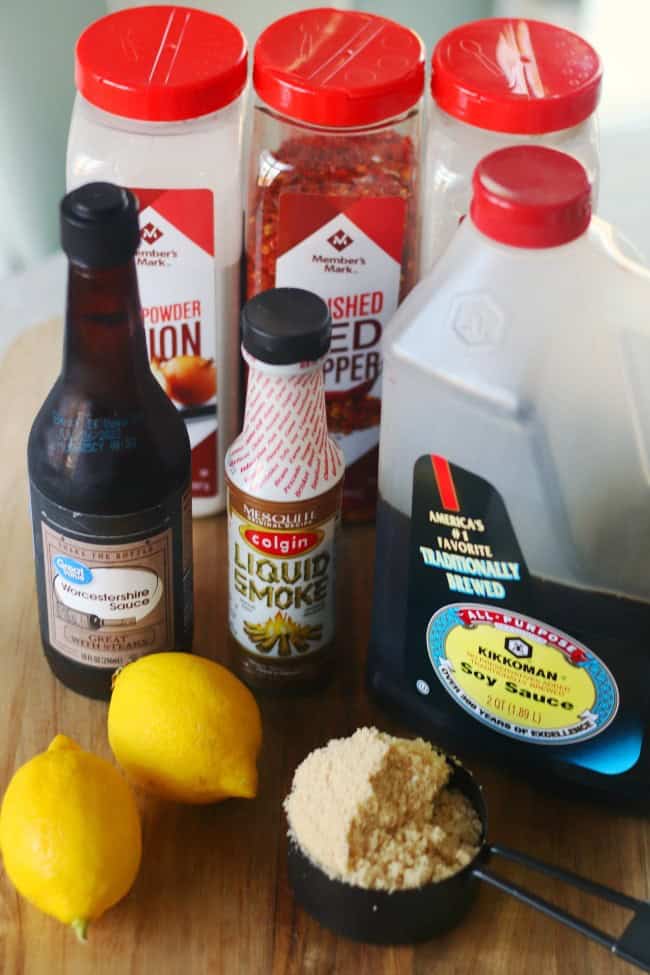
Original Marinade
- Soy sauce
- Worchestershire sauce
- Garlic powder
- Onion Powder
- Pepper
- Red pepper flakes
Sweet and Smoky Marinade
- Soy sauce
- Worchestershire sauce
- Liquid smoke
- Brown sugar
- Salt
- Pepper
- Meat tenderizer
- Garlic powder
- Onion powder
- Paprika
Lemon Marinade
- Soy sauce
- Lemon juice
- Garlic powder
- Lemon pepper
- Pepper
- Salt
- Red pepper flakes
- Tabasco sauce
See the recipe card for full information on ingredients and quantities.
How To Make Homemade Jerky
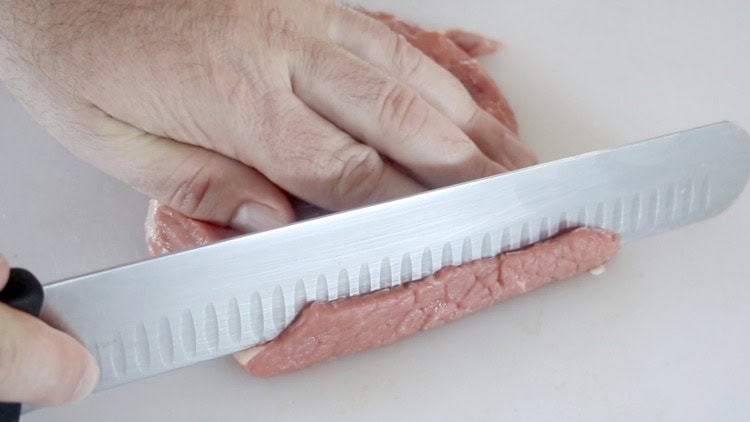
Step 1: Remove as much fat as you can from the eye of round. Slice it into thirds to make it manageable to work with.
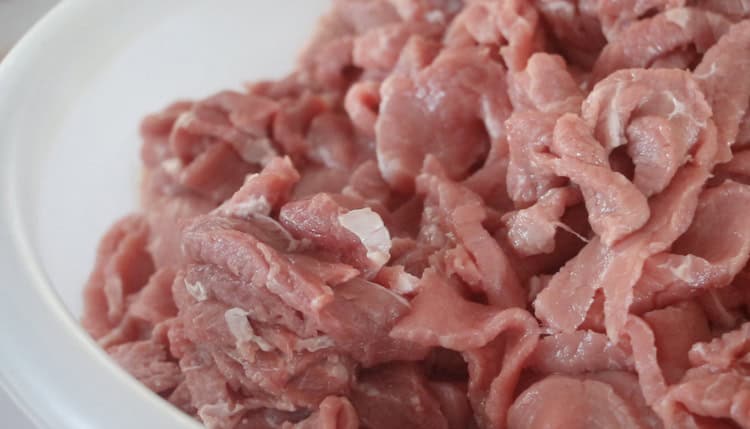
Step 2: Slice meat into thin strips (⅛" - 1/16").
Note: The length of the strips is up to you. We like ours in smaller strips.
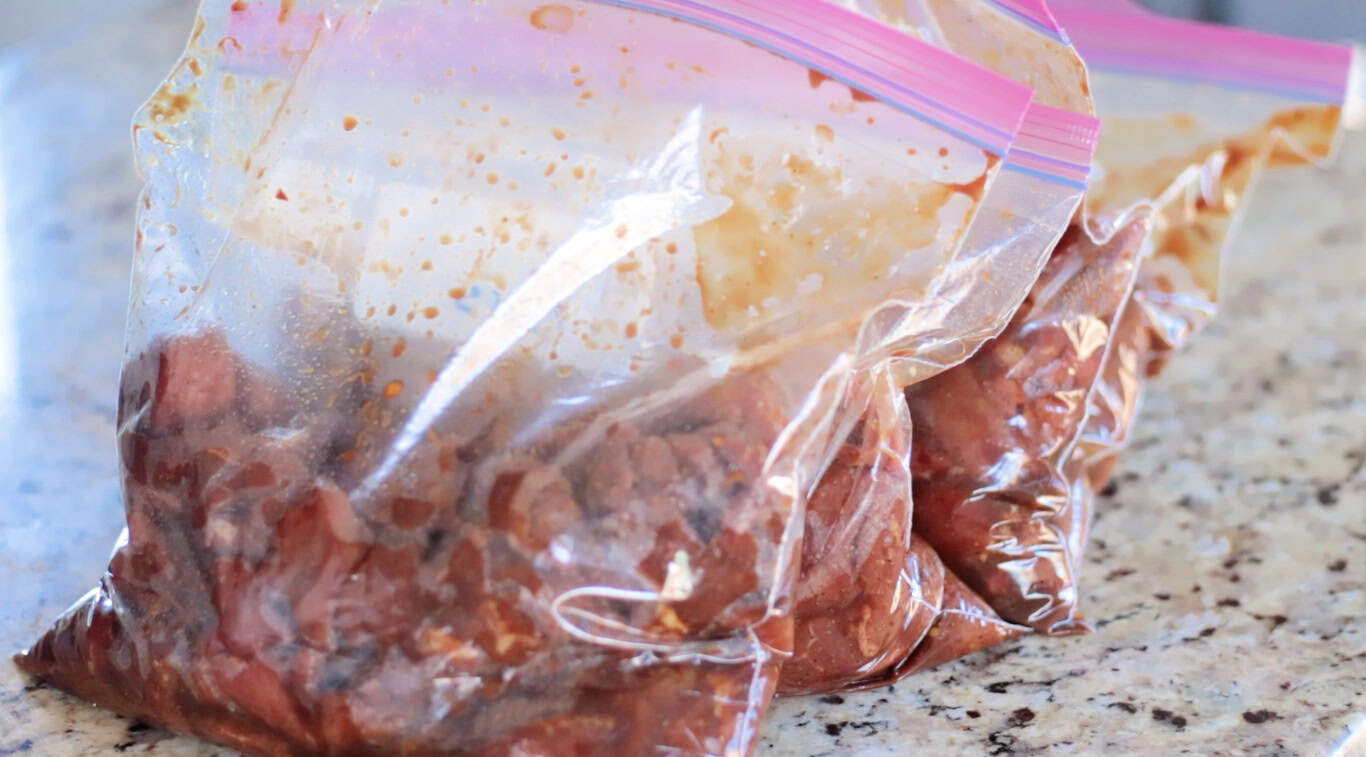
Step 3: Select a marinade recipe you'd like to make. Mix ingredients in a gallon-sized plastic bag. Place strips of meat into the marinade and chill for 30-60 minutes.
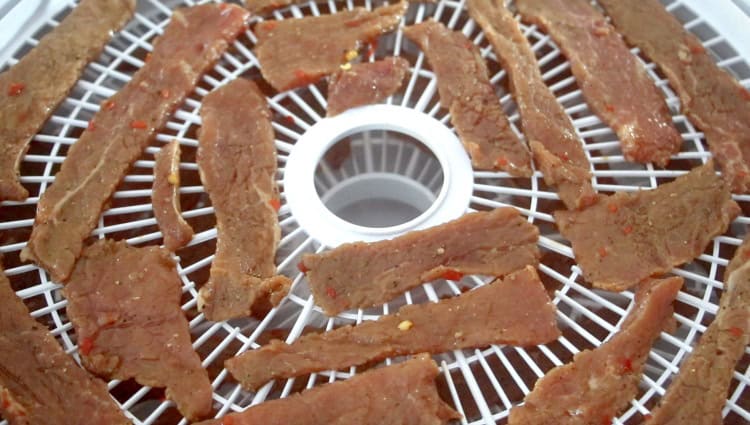
Step 4: Place marinated slices of meat onto the dehydrator trays.
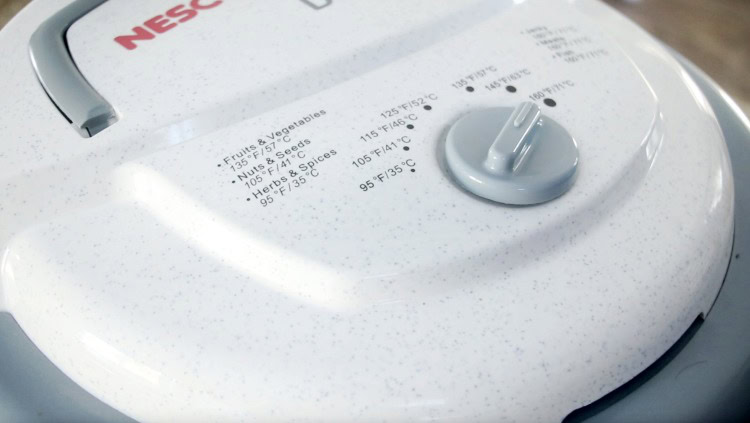
Step 5: Set the dehydrator to 160 degrees. Periodically rotate the trays from bottom to top to ensure even drying.
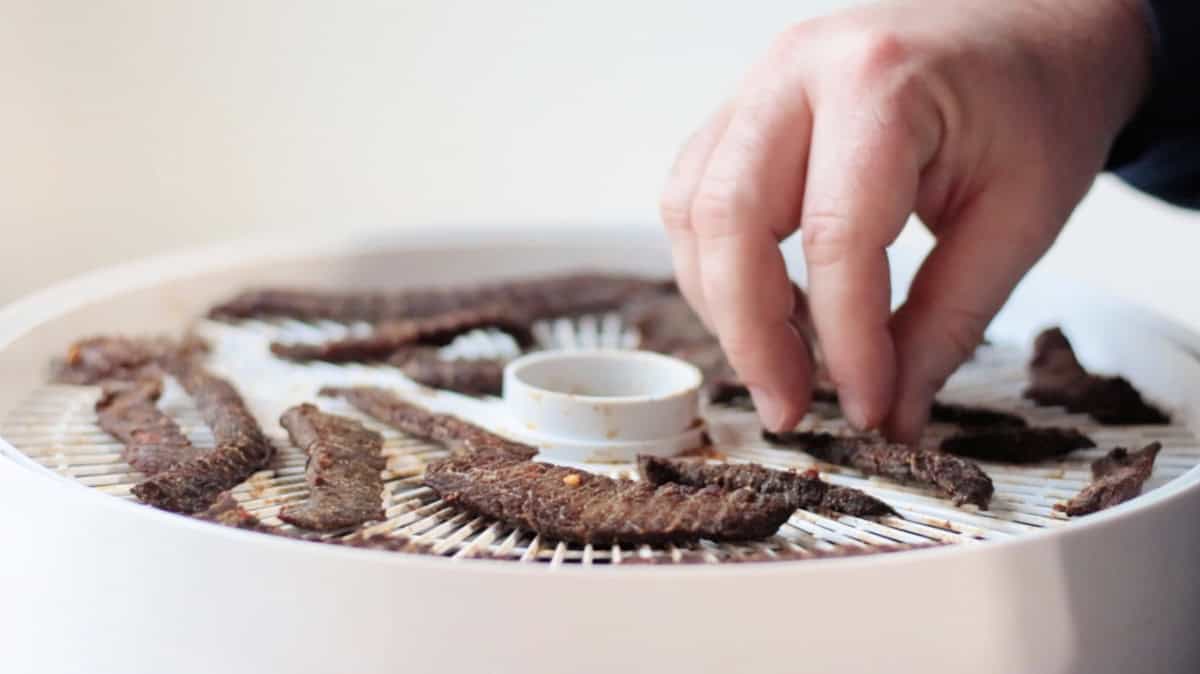
Step 6: At the 3-hour mark, flip all the jerky strips over and begin testing them. Take the individual jerky pieces and squeeze/pinch them to see if they have any give. If it doesn’t, it’s done.
Note: Not all of the jerky will be ready at the same time. Just keep checking at regular intervals and remove as needed. As you remove jerky strips, try to reduce the number of trays you're using. The farther the heat source is, the longer this will take, so removing the trays, in theory, should speed up the process. If you are using the same dehydrator we have, you must always have at least four trays in use.
Homemade Jerky FAQs
Jerky loses approximately 50-75% of its weight during the drying process. 1 pound (16 ounces) of meat will yield ⅓ to ½ pound of jerky.
There are really three things that affect this: the thickness of your cut, how tight the trays are packed, and the number of trays. The thicker the meat is the longer it takes to dry out. If you cover the entire tray with meat, it doesn’t allow airflow. Place strips of meat evenly on tray (not touching eachother).
The more trays you use the further away from the heat source that bottom tray is going to be which will add more time. A batch, if cut thin enough will take about 3 hours to dry.
At the 3-hour mark, flip all the jerky strips over and begin testing them. This is a very hands-on job. Take the individual jerky pieces and squeeze/pinch them to see if they have any give. If it doesn’t, it’s done. Not all of the jerky will be ready at the same time. Just keep checking at regular intervals and remove as needed.
If stored properly in an airtight container or a Ziploc bag, homemade jerky will stay fresh at room temperature for 1-2 months or in the refrigerator for 3-6 months. You can also freeze jerky for up to 12 months.
More Savory Recipes To Make
MADE THIS RECIPE AND LOVED IT? 💛 Please leave a STAR rating and COMMENT below! Post it to Facebook or Pinterest to easily share with friends!
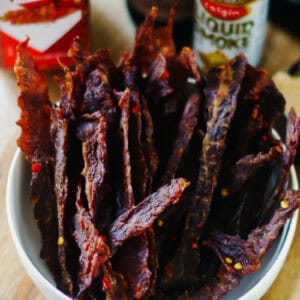
Easy Homemade Jerky
Ingredients
- 2.5 pounds beef eye of round
Original Jerky Marinade
- ¾ cup soy sauce
- 2 Tbsp. Worcestershire sauce
- 2 Tbsp. garlic powder
- 1 teaspoons black pepper
- 1 Tbsp. onion powder
- red pepper flakes to taste
Sweet and Smoky Marinade
- ¼ cup soy sauce
- 2 Tbsp. Worcestershire sauce
- 2 Tbsp. liquid smoke
- 2 Tbsp. brown sugar
- 2 teaspoons salt
- 2 teaspoons ground black pepper
- 2 teaspoons meat tenderizer
- 2 teaspoons garlic powder
- 2 teaspoons onion powder
- 2 teaspoons paprika
Lemon Marinade
- ¼ cup soy sauce
- ¼ cup lemon juice
- 2 Tbsp. garlic powder
- 1 Tbsp. lemon pepper
- ½ teaspoon salt
- 1 teaspoon Tabasco sauce
- 1 teaspoon red pepper flakes
Instructions
- Slice meat into thin strips (⅛" - 1/16").
- Select a marinade recipe you'd like to make. Mix ingredients in a gallon-sized plastic bag. Place strips of meat into the marinade and chill for 30-60 minutes.
- Place marinated slices of meat onto the dehydrator trays.
- Set the dehydrator to 160 degrees. Periodically rotate the trays from bottom to top to ensure even drying.
- At the 3-hour mark, flip all the jerky strips over and begin testing them. Take the individual jerky pieces and squeeze/pinch them to see if they have any give. If it doesn’t, it’s done.





Brandy says
Our favorite is the original jerky marinade. Very flavorful and the jerky has great texture!