
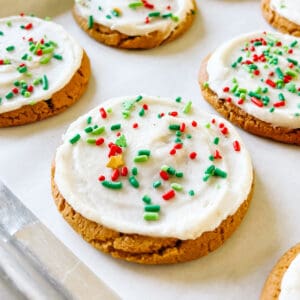
These frosted ginger cookies are soft, chewy, and packed with warm ginger, cinnamon, cloves, and molasses. They have slightly crisp edges and soft centers, then they're topped with a creamy vanilla buttercream frosting and Christmas sprinkles.
If you're planning a holiday baking day, don't miss my 40 Christmas Cookie Recipes for more classic and festive cookies to add to your Christmas cookie trays.

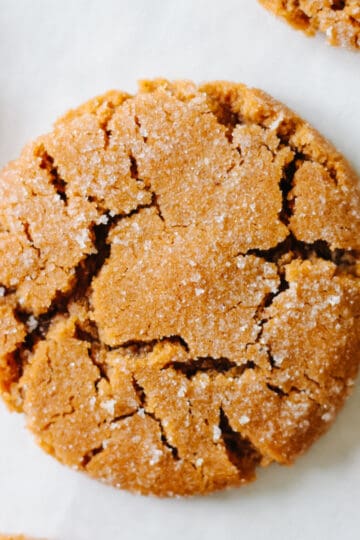
These yummy cookies are based on my popular bakery-style molasses cookies, but I made them smaller and added a layer of frosting for an extra-special holiday treat. Best of all, there's no chilling the cookie dough, so you can have a batch of soft ginger cookies ready for the oven in minutes.
- No-chill cookie dough. You don't have to wait for the dough to chill before baking. Mix, scoop, and bake!
- Warm gingerbread flavor. Molasses, ginger, cinnamon, and cloves give these cookies that classic holiday flavor.
- Creamy buttercream frosting. The simple vanilla frosting adds sweetness and richness without overpowering the spiced cookie.
- They stay soft for days. The cookies become even softer and more flavorful as they sit, making them perfect for baking ahead of the holidays.
- Easy to decorate. Spread on the frosting and add Christmas sprinkles. You don't need any special decorating skills.
What Are Frosted Ginger Cookies?
Frosted ginger cookies are soft ginger and molasses cookies topped with a layer of sweet buttercream frosting. They're similar to traditional molasses cookies, but the frosting gives them a softer, sweeter finish and makes them especially festive for Christmas.
These cookies are inspired by my bakery-style molasses cookies, but they're made smaller and finished with vanilla buttercream and sprinkles. The combination of molasses, ginger, cinnamon, cloves, and vanilla gives them a classic old-fashioned ginger cookie flavor.
Tips and Tricks
- Use a combination of butter and shortening. The combination gives you the best of both worlds: butter provides rich flavor while shortening helps the cookies stay soft and chewy and hold their shape.
- Don't chill the dough. This recipe is designed to go directly from the mixing bowl to the baking sheet. Chilling isn't necessary.
- Use regular molasses. Choose unsulphured molasses from the baking aisle rather than blackstrap molasses. Blackstrap is much stronger and can make the cookies taste bitter.
- Don't roll the cookies in sugar. Since these cookies are going to be frosted, there's no need to coat the dough balls in sugar before baking.
- Don't overbake. The cookies should look set around the edges but still be soft in the center. They'll continue to firm up as they cool.
- Cool completely before frosting. If the cookies are still warm, the buttercream will melt and slide off.
- Adjust the baking time based on cookie size. A 2-tablespoon scoop makes about 30 cookies and takes about 10–11 minutes. Larger cookies need additional baking time.
- Use light-colored baking sheets. I bake these cookies on light metal baking sheets. If you use dark baking sheets, they may brown more quickly and may need less baking time.
Ingredients
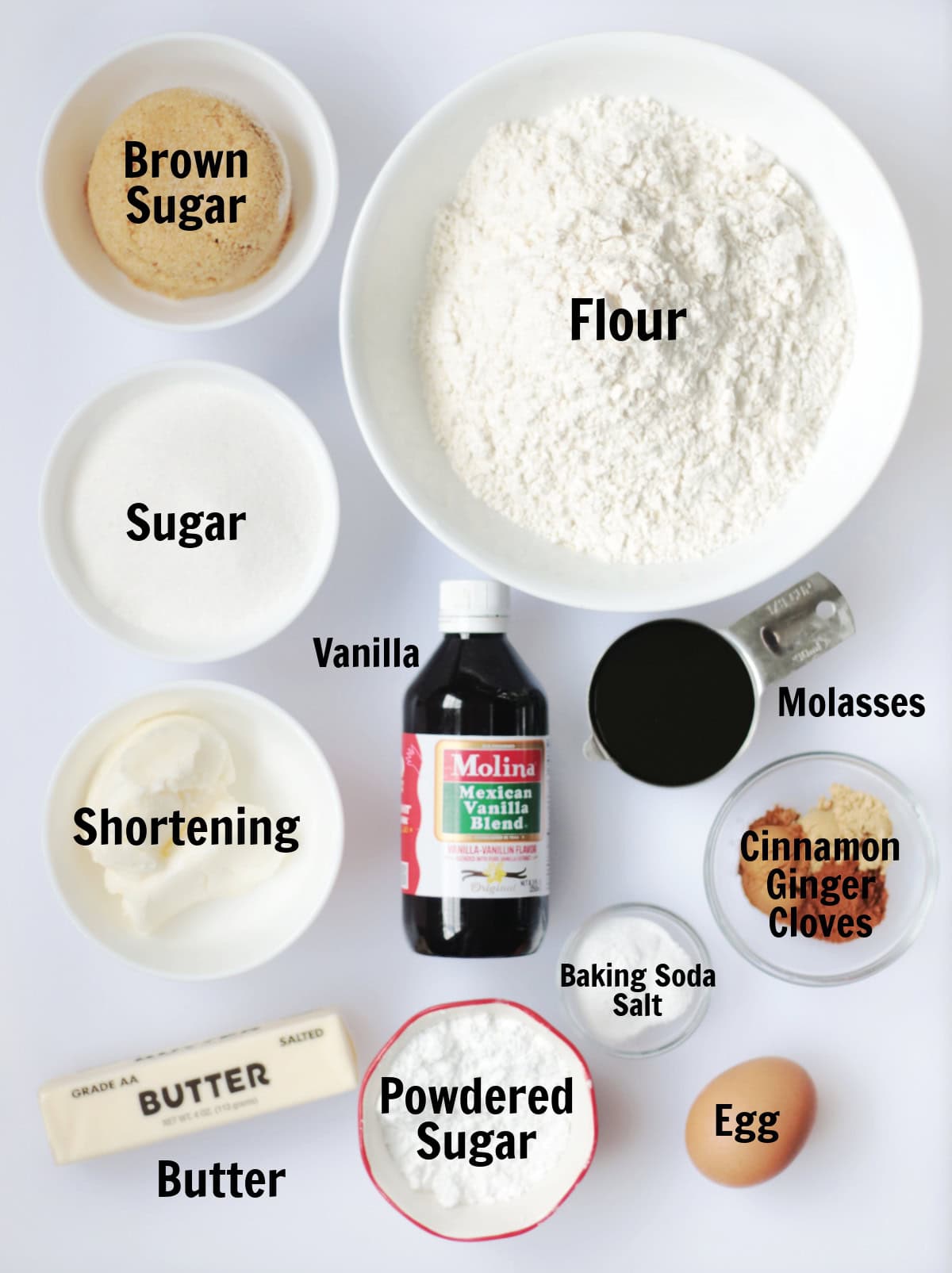
- Butter and shortening: Shortening has a higher melting point, so cookies will hold their shape longer in the oven before the fat melts in the dough, which results in moist, chewy cookies. Butter melts more quickly and releases some steam so that cookies will spread more and be crisper, with a distinctly buttery flavor. I use both for the best of both worlds.
- Brown sugar and white sugar: I like using a mixture of brown and white sugar for the best flavor and consistency.
- Large egg: a room temperature egg for richness and texture.
- Molasses: obviously. Use the basic unsulphured molasses from the grocery store, not blackstrap, which has an overwhelming flavor.
- Vanilla extract: Adding a splash of vanilla extract or homemade vanilla paste is always a good idea. I used vanilla extract for the cookies and vanilla paste for the icing, but you can use extract for both. I like the faint flecks of vanilla that the paste adds to the icing.
- Spices: ground ginger, ground cinnamon, and ground cloves.
- All-purpose flour
- Baking soda and salt: for leavening and flavor.
- Powdered sugar: The frosting is made from powdered sugar, milk, butter and vanilla.
- Milk: Milk is used to thin out the frosting to a spreadable consistency.
See the recipe card for full information on ingredients and quantities.
How To Make Frosted Ginger Cookies
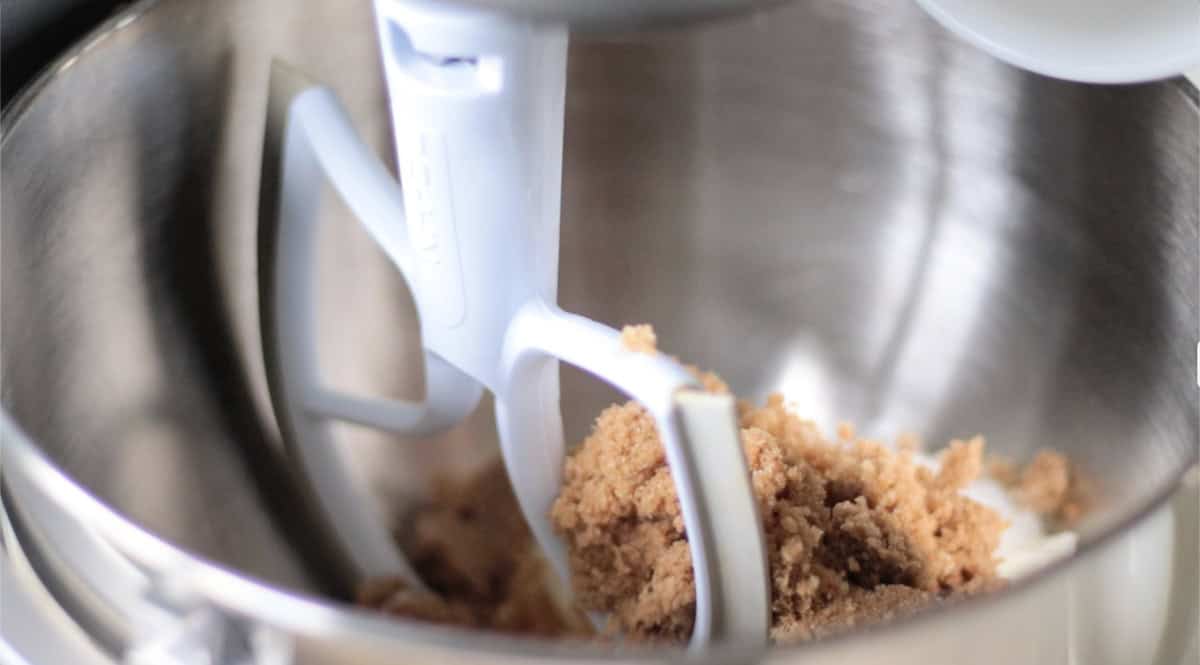
Step 1: Combine shortening, butter, brown sugar, and granulated sugar in a large mixing bowl. Mix with an electric mixer until smooth and creamy.
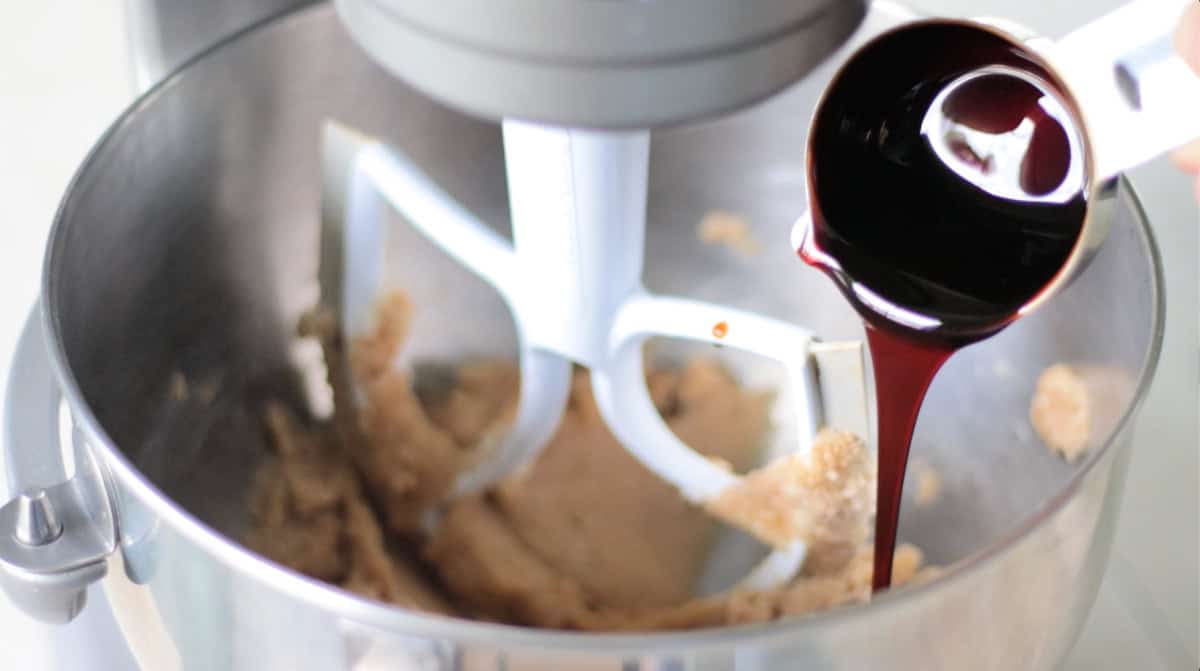
Step 2: Add molasses, egg, and vanilla extract. Mix.
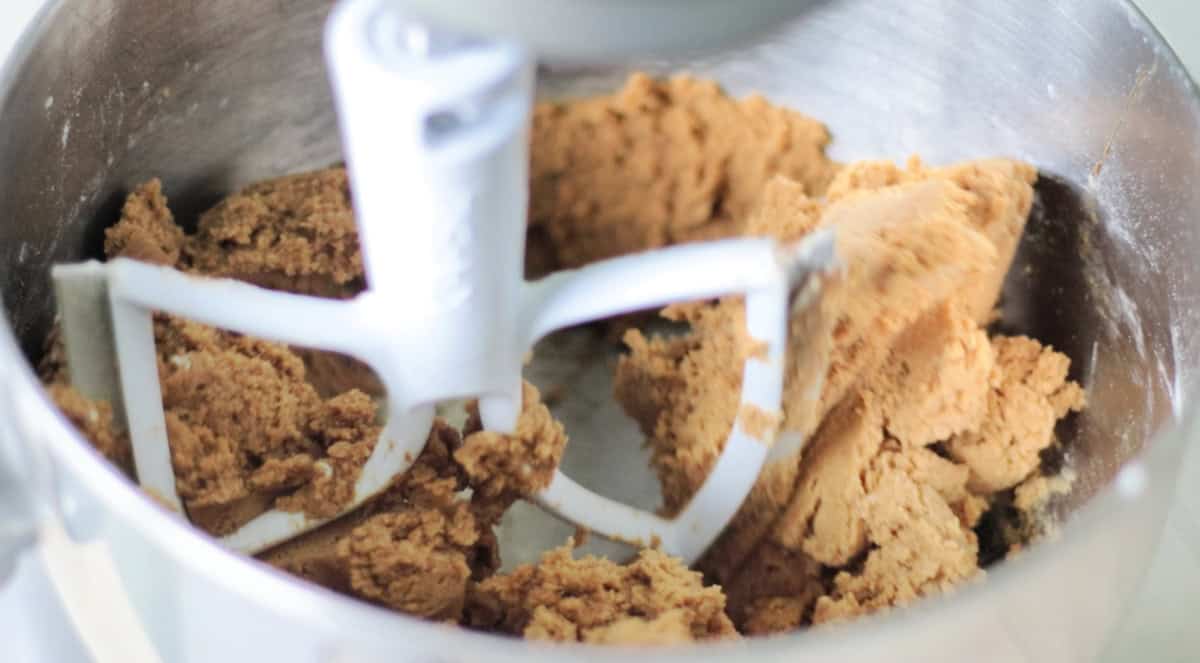
Step 3: Add cinnamon, ginger, cloves, salt, and baking soda. Mix. Add flour, 1 cup at a time, and mix until just combined.
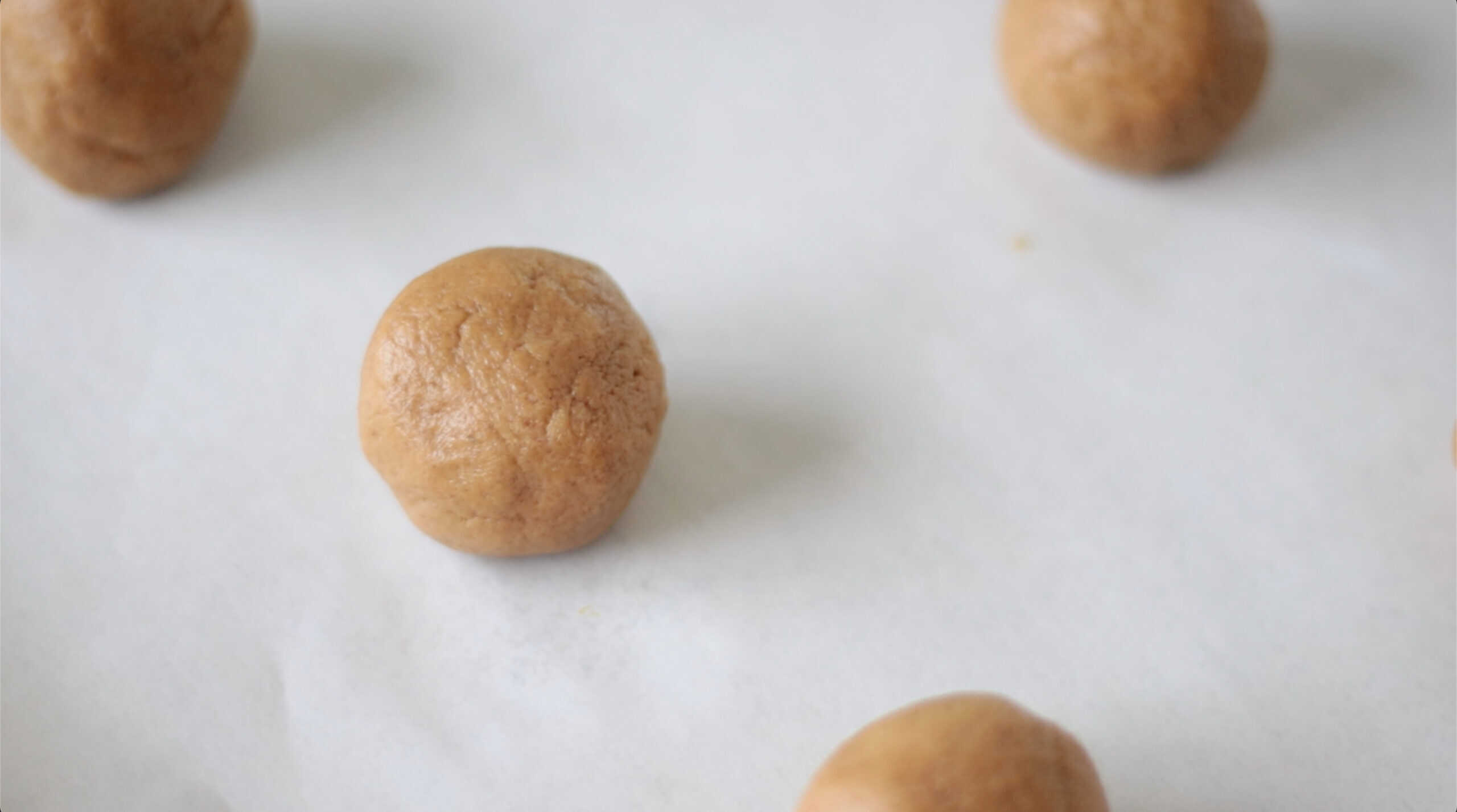
Step 4: Roll cookie dough into 2 Tbsp. sized balls. Place on parchment-lined baking sheets.
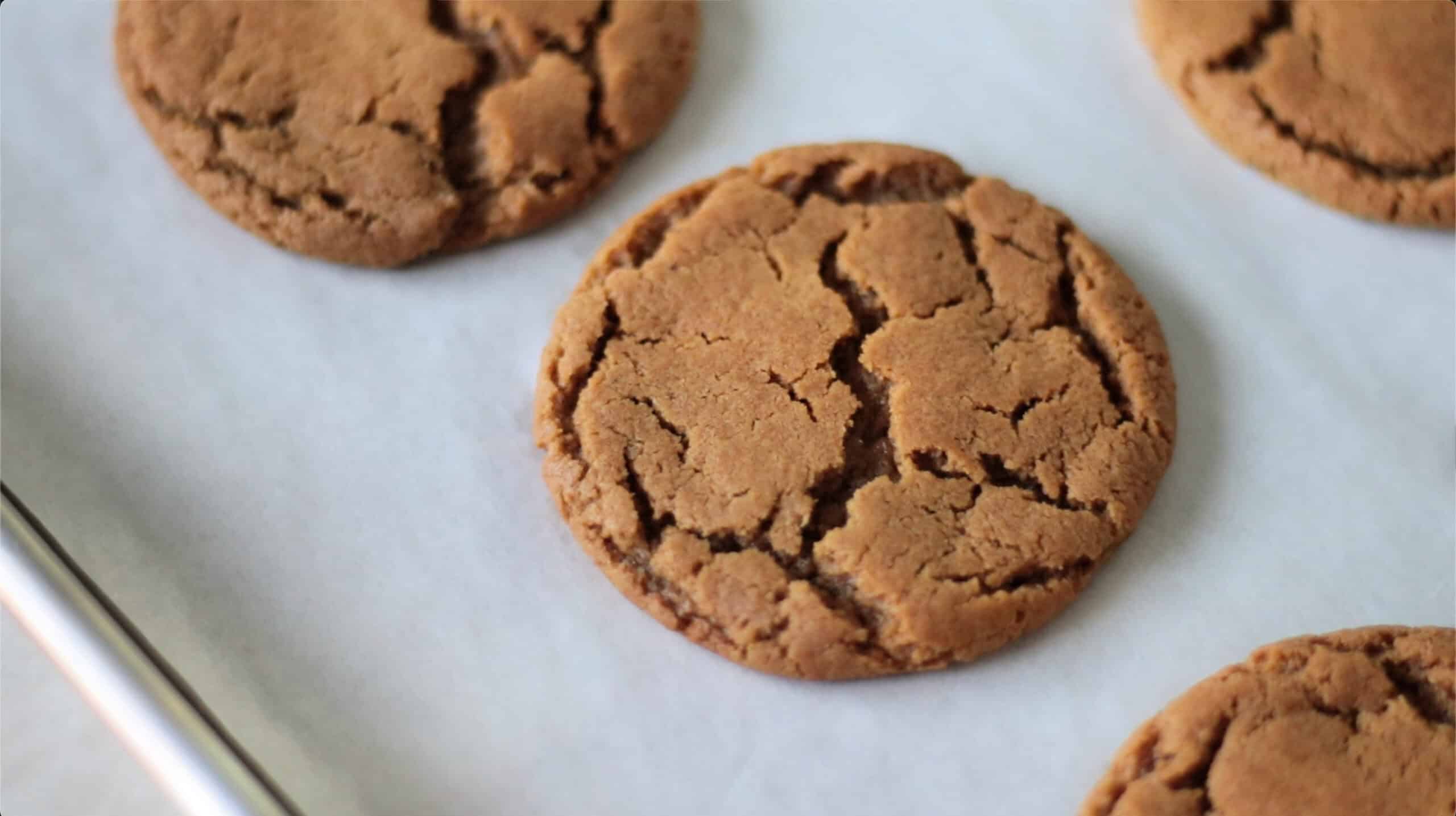
Step 5: Bake the cookies at 350°F for 10-12 minutes. Allow cookies to cool on baking sheets.

Step 6: Beat frosting ingredients together until smooth and creamy. Spread over cooled cookies and top with sprinkles.
The frosting will set up enough to store the cookies in an airtight container, but will still remain soft.
Baking Time Adjustments
- 2 Tbsp. scoop: Bake for 10-11 minutes. Makes 30 cookies.
- 3 Tbsp. scoop: Bake for 12-13 minutes. Makes 20 cookies.
- 4 tablespoon scoop (¼ cup): Bake for 14-15 minutes. Makes 15 cookies.
I bake with light baking sheets, so my recipe times reflect that. If your cookie sheets are dark, you may need to adjust the baking time by baking the cookies for a shorter period.
Ginger Cookies FAQs
Traditionally, gingersnaps are a small, crispy ginger cookie, while molasses cookies are soft and rich with less of a ginger kick. Both contain molasses and ginger. Essentially, one is crispy, while the other is soft and chewy. Molasses cookies are also called ginger cookies, but they are essentially the same thing.
I bake with light metal baking sheets, so my recipe bake times reflect that. If your cookie sheets are dark, you may need to adjust the baking time by baking the cookies for a shorter period. Light metal baking sheets (aluminum) bake more evenly than dark metal baking sheets.
I don't use shortening in every cookie recipe, but I really like the combination of butter and shortening in these ginger cookies. Butter gives the cookies rich flavor and helps create slightly crisp edges, while shortening has a higher melting point that helps the cookies hold their shape and contributes to a soft, chewy texture. Using both gives these cookies crispy edges, soft centers, and rich buttery flavor.
Yes. You can substitute butter for the shortening, but the texture will be somewhat different. The cookies may spread more and won't have exactly the same combination of crisp edges and chewy centers.
No. That's one of the best things about this recipe! The dough can be scooped and baked immediately after mixing.
I don't recommend it. Regular unsulphured molasses has a much better flavor for cookies. Blackstrap molasses is stronger and more bitter.
Make sure your butter isn't melted or overly warm, measure the flour correctly, and bake the cookies on a cool baking sheet. If your kitchen is especially warm, you can briefly chill the dough, although this isn't normally necessary.
The edges should look set while the centers still look soft. Don't wait for the cookies to become completely firm in the oven or they can turn out too crisp once cooled.
Yes. Use a smaller cookie scoop and reduce the baking time. Start checking them early because small cookies can bake quickly.
Yes. The frosting sets enough to allow the cookies to be stored in an airtight container, although it remains soft rather than becoming completely hard.
Store them in an airtight container at room temperature for 3–5 days.
Yes. Place the cookies in a freezer-safe container with parchment paper between the layers. Freeze for up to 2 months. Thaw at room temperature.
Yes. Shape the dough into portions and freeze them in a single layer until firm, then transfer them to a freezer-safe container. Thaw before baking.
Absolutely. The recipe makes about 30 cookies using a 2-tablespoon scoop, and the frosting sets enough to make the cookies easy to store and transport.

More Ginger Cookie Recipes To Make
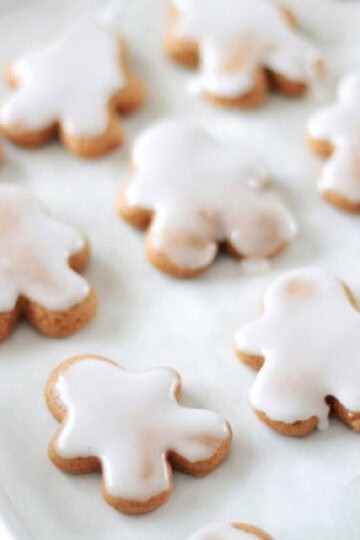
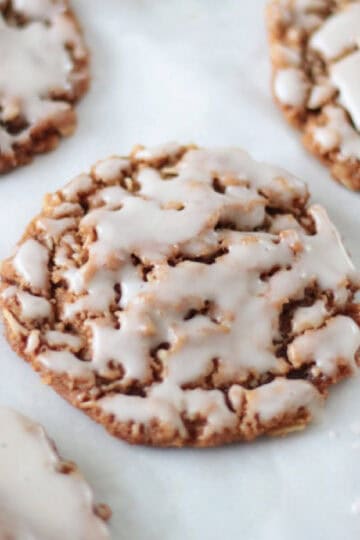
Love gingerbread? I've rounded up all of my favorite gingerbread recipes, from classic gingerbread cookies to cookie bars, muffins, and more. See my collection of Gingerbread Recipes for even more recipes to bake this holiday season.


MADE THIS RECIPE AND LOVED IT? 💛 Please leave a STAR rating and COMMENT below! Post it to Facebook or Pinterest to easily share with friends!
Frosted Ginger Cookies
Ingredients
Cookie Dough
- ½ cup shortening
- ½ cup salted butter softened
- ¾ cup brown sugar packed
- ¾ cup granulated sugar
- 1 large egg
- ⅓ cup molasses
- 1 teaspoon vanilla extract
- 2 teaspoons ground cinnamon
- 1 ½ teaspoons ground ginger
- ½ teaspoon ground cloves
- ½ teaspoon salt
- 2 teaspoons baking soda
- 3 ¼ cups all-purpose flour fluff then scoop
Frosting
- ½ cup butter 1 stick
- 3 cups powdered sugar
- 3-4 Tbsp. milk
- 1 teaspoon vanilla extract or vanilla paste
Instructions
- Preheat oven to 350 degrees. Line baking sheets with parchment paper.
- Combine shortening, butter, brown sugar, and granulated sugar in a large mixing bowl. Mix with an electric mixer until smooth and creamy.
- Add molasses, egg, and vanilla extract. Mix.
- Add cinnamon, ginger, cloves, salt, and baking soda. Mix.
- Add flour, 1 cup at a time, and mix until just combined.
- Scoop dough into 2 tablespoon-sized balls.
- Place cookie dough balls onto cookie sheets, 2" apart.
- Bake cookies for 11 minutes (see baking chart in notes section for adjustments for smaller or larger cookies).
- Allow cookies to cool on the baking sheet.
- Combine frosting ingredients and beat until smooth with an electric mixer.
- Frost each cookie and add sprinkles.
Notes
- 2 Tbsp. scoop: Bake for 10-11 minutes. Makes 30 cookies.
- 3 Tbsp. scoop: Bake for 12-13 minutes. Makes 20 cookies.
- 4 tablespoon scoop (¼ cup): Bake for 14-15 minutes. Makes 15 cookies.


Brandy says
These are so soft and were even softer on the second day! Very flavorful.
Valerie says
I noticed you used shortening on this and on your sugar cookies. Is there a reason why? Will using butter instead of shortening work?
Brandy says
You can use butter but shortening makes them softer and chewier. They’ll be even more soft on day 2, but butter works and is delicious too!